“Bureaucracy is the art of making the possible impossible.” ~ Javier Pascal Salcedo
If there is one complaint about government that has been a constant for generations, its government red tape.
Red tape can be loosley defined as excessive regulation or rigid conformity to formal rules that can be considered redundant or bureaucratic and hinders or prevents action or decision-making. It is usually applied to governments, corporations, and other large organizations. Another definition is the collection or sequence of forms and procedures required to gain bureaucratic approval for a project, especially when oppressively complex and time-consuming. A third definition is the bureaucratic practice of hair splitting or foot dragging, blamed by its practitioners on the system that forces them to follow prescribed procedures to the letter. Red tape generally includes filling out paperwork, obtaining licenses, having multiple people or committees approve a decision and various low-level rules that make conducting one's affairs slower, more difficult, or both. Red tape can also include filing and certification requirements, reporting, investigation, inspection and enforcement practices, and procedures.
It’s a problem for the public and it’s a problem for elected officials. Today, the real problem, besides the inherent delay in government, is that the only time red tape would serve a useful purpose; the special interest groups have organized a way around it. The result is a lot of good does not get done and a lot of harm is not avoided.
For instance, I personally know that the Mayor of the City of Salisbury, James Ireton, has been organizing an effort to clean up the Wicomico River, which runs through his city. A major part of this effort is to remove some rusting boat wrecks from the river. This is an effort that everyone and anyone can get behind. However, in reality, the red tape and delay have stalled the project multiple times and made it far more difficult and expensive than necessary.*
Meanwhile, a developer in Dorchester County has made a concerted effort to build a resort on land that has been set-aside as a wildlife refuge. While he has yet to be successful, it is action by the public that has blocked him. When it comes to red tape, he has become an expert in cutting, skirting, and avoiding hassles. The difference should be clear: when money and power are at hand the red tape doesn’t serve its purpose. The people are not served by this system.
As always, lets take a look at the history. The origin of the term "red tape" is somewhat obscure, but it is first noted in historical records in the 16th century when Henry VIII repeatedly asked Pope Clement VII for the annulment of his marriage to Catherine of Aragon. He used around eighty or so petitions. Each document was sealed and bound with the obligatory red tape, as was the custom. Around the same time, the Spanish administration of Charles V started to use the red tape in an effort to modernize running his vast empire. The red tape was used to bind the important administrative documents that had to be discussed by the Council of State, and separate them from the issues that were treated in an ordinary administrative way, which were bound by an ordinary rope. Although they were not governing such a vast territory as Charles V, this practice of using red tape to separate the important documents was quickly copied by the other modern European monarchs to speed up their administrative machines. In the 19th century, all American Civil War veterans' records were bound in red tape, and the difficulty in accessing them led to the modern American use of the term, but there is evidence (as detailed above) that the term was in used in its modern sense sometime before this.
While red tape has always been a government problem, it became exacerbated as many things did, in the 1950s and 60s. After WWII, the federal bureaucracy, streamlined (somewhat) by war, had created clear rules, most of which did not require a lawyer to follow. However, with deregulation, complex but clear rules gave way to ‘The Exception’. Bureaucratic bodies abandoned their traditional clear-cut rulings and created loopholes, exceptions, and conflicting case law. As a result, not only was a lawyer helpful to navigate the system, it became necessary. Instead of following a process, one had to and must now dig through decades of case law to find a precedent or argue for the creation of a new one. What this created was what we discussed in the last post: a system where an insider can learn the process and then be paid for that knowledge in the private sector. The result is the system we have now.
The Paperwork Reduction Act of 1980 is a federal law enacted in 1980 designed to reduce the total amount of paperwork burden the federal government imposes private businesses and citizens. The Act imposes procedural requirements on agencies that wish to collect information from the public. It also established the Office of Information and Regulatory Affairs (OIRA) within the Office of Management and Budget (OMB), and authorized this new agency to oversee federal agencies' collection of information from the public and to establish information policies. A substantial amendment, the Paperwork Reduction Act of 1995, confirmed that OIRA's authority extended over not only agency orders to provide information to the government, but also agency orders to provide information to the public. Unfortunately, they did little to solve the complex regulatory system.
When a bureaucratic system becomes too complex for a layman, the system is no longer serving the public. With complexity comes an increase in cost and a decrease in speed- neither of which serve the public interest. Further, a complex system is designed for industries that can afford and take the time to find an end around the system, not for the public who needs simple, straightforward answers.. The current system does not serve the people.
Many politicians run on a platform of cutting red tape, but none of them are successful. It is a great ploy to get votes, but in the end, when they can't change the rules, they blame it on the red tape that they sought to eliminate in the first place. The time for excuses is over. This is one way, of many, that we need to stop the status quo in Washington. We need to say, once and for all, that this is unacceptable. If changes aren't made, we'll change the ones ignoring us.
The solution is much clearer and more straightforward than most others, however, it is also a longer-term solution. The Executive and Legislative Branches with the advice of the Judicial should form a Commission to begin a two-year study by an independent group of legislators, judicial, and executive officials. This commission will analyze the entire United States Code, all Federal regulations, all Federal Rules, all agency decisions, and all other aspects of the federal bureaucracy. This will be done in an effort to remove, simplify, clarify, and, in all non-substantive, ways re-write the Federal Code and federal bureaucratic system documents. The hope is, after this study, the system can be standardized among agencies and return the system to one that can be comprehended and handled by a layman.
This is not a new idea. Many states have undertaken this very process to modernize their laws and codes. This will be applying that strategy to the federal government. The result will be a system that will reject money as power. A corporation or wealthy individual should not be able to buy their way around the roadblocks that others face. This will be the final part of getting the money out of politics that will be started with campaign finance reform.
© Robert Cheek, 2011, 2013
* Mayor Ireton has since had success in his efforts to begin cleaning up the Wicomico River and has won re-election as mayor of Salisbury.
Monday, May 6, 2013

Tuesday, April 30, 2013
The future of this blog.
"And now you know the REST of the story." – Paul Harvey
Thus far, I have covered many topics. Some of the them have been about current events, and others have been about general political ideas. I will continue to do this as the blog progresses. However, as I've said before, this blog is part and parcel of my life's work: a forthcoming book which will outline my political philosophy and my plan for reforming the American political and social system. The two most important posts, and the ones that make up the base of my ideological approach are the posts on Campaign Finance Reform and on Economy Reform. What follows is the rest of the story.
The devil, as they say, is in the details. I must stress that none of my political ideals that you have read or will read in the future is really new. Rather, this is an amalgamation of other ideas. I am putting together parts of ideas that are often separated by time and geography. Moreover, the broad plan is really just combining these ideas into one big plan; many aspects of which have been attempted, in part at least, in the not so distant past. The flaw of those past efforts has been in the implementation. The government is a huge machine and, like a boulder rolling down hill, a small adjustment will only bring big changes if given the chance to affect that change in the long term. With House races every 2 years, Presidential every 4 (and a 2 term limit), and Senate races every 6; there is just not enough time for these small adjustments to turn into changes that elected officials can run for re-election on. Sadly, that is what elected officials are counting on.
The status quo in Washington has been to do everything possible to make it look like progress is occurring without rocking the boat too much in reality. The politicians can run on the "change" that has occurred, but with the high turnover of ideas and the changing tide of ideology, no real change will occur. Thus, real change requires something else. Rather than a small change, or a series of small changes, we need to implement something drastic. We need a reformation: total change.
Unfortunately, as stated above, the system itself is adverse to change and is not capable of it. Thus, the system itself must be changed to accomplish the goals, and that is why the change must come along the lines outlined here.
First, we must be sure that the system is working for the people’s best interest. Until the money is taken out of politics, none of what I've outlined or will outline in the future will be possible. Instead of one special interest group confronting a single issue, all of these groups will be confronting one issue together.
Sweeping reforms like I will outline in the future will have many enemies. These reforms will cut deeply into the pocketbooks and power of many people and organizations. When they feel that the status quo is in danger, they will fight it. In their efforts to fight it, they will use all the resources they have. Their resources are vast and those are not odds that the people, even united, can defeat. Thus, campaign finance reform is the first step in the process. Without it, the rest of the reform cannot be accomplished.
Sweeping reforms like I will outline in the future will have many enemies. These reforms will cut deeply into the pocketbooks and power of many people and organizations. When they feel that the status quo is in danger, they will fight it. In their efforts to fight it, they will use all the resources they have. Their resources are vast and those are not odds that the people, even united, can defeat. Thus, campaign finance reform is the first step in the process. Without it, the rest of the reform cannot be accomplished.
Once the system is capable of the reform, we then need to wake-up the populous and fund the reformational changes that need to be made. Generally, when people are worried about feeding themselves and their families, keeping a roof over their heads, and taking care of the basic necessities; the greater issues of the republic are not important. That is where the economic reforms become essential. We must make the citizenry economically secure and then their lives can be made better. We must also make the funds available for the reforms, which may be costly, without exacerbating the deficit and debt problems we are all ready facing.
Thus, we come to the next steps, and the ones I will address going forward. As this blog continues, I will outline the largest proposed change of federal policy in a century. I want to be clear: although I will discuss them over time, they must be implemented together. That drastic change cannot be ignored or dismissed by elected leaders or the federal bureaucracy (I'll cover the way the bureaucracy can ignore policy changes and keep "the boulder running downhill" despite our best efforts and intentions as well). If this effort is tied with a movement to reduce red tape and revamp the federal code, it will make permanent the improvements we need. I look forward to sharing this plan with you in the coming weeks and months.
© Robert Cheek, 2011, 2013
Tuesday, April 23, 2013
Reforming our Economy and Economic Policy

Now, anybody who thinks that we can move this economy forward with just a few folks at the top doing well, hoping that it's going to trickle down to working people who are running faster and faster just to keep up, you'll never see it. – Barack Obama
Contrary
to the belief of some, Americans do NOT
need great economic conditions all of the time. What people want, as
the election of Barack Obama showed, is a reason to hope. They want
to believe that in four, eight, ten, or twenty years, they could be
better off than they are today. More importantly, they want to know
they will be leaving the next generation a better place than the one
they were given. They will go through hell as long as those two
things become become
true.

How
do we know that? Look at the Great Depression and WWII. People went
without, they worked hard, and they did whatever they could to meet
our national goals. In the case of WWII, people sacrificed and did
without in order to support the war effort and our servicemen
overseas. In our age, it will be to make a better nation. Now, all
that is missing for a return to economic power is for Americans to
answer the call to greatness once again.

So
what is the issue? The problem is two-fold and I will attempt to
address each one individually. First, in the 1970s, America lost its
manufacturing dominance. The economies of Europe and Japan were
rebuilt and became true competitors to the United States. Developing
nations were, at the same time, creating and growing their own
industry. New economic giants like China, South Korea, Taiwan, India,
etc were growing rapidly and offering competition to a US economy
that had been the only show in town for two decades.
As
the 1970s turned into 80s and 90s, American industry just could not
keep up. A focus on man-power
driven, heavy manufacturing with high wages, high benefits, and high
costs tied to a continually diminishing quality of product (when
compared to other nation’s output) caused American industry to
wither on the vine. A visit to any American store will show
this. Situation is the same as it was in the 1960s: any number of
consumer goods that Americans could purchase had competing products
from American companies and overseas companies in 1960; but today,
one can not purchase an ‘American’ TV, computer, appliance, car
(with the exception of two foreign nameplates and luxury
automobiles), and American textiles have become a niche industry.
As
industry faded away, the U.S. transitioned to a service economy, or
so politicians told us. The Internet boom was part of this
transition. However, the difficulty with this transition is that,
unlike the slow changes during the decades of manufacturing, the
advance of technology during the transition to a service economy was
exponential. The advances in communications and computer technology
allowed for, in short order, many of these service jobs to be sent
overseas as well, creating the current outsourcing problem.

Today,
we are a nation of menial wage service (retail) jobs. Although
unemployment has not reached historic levels (set during the Great
Depression), what goes unsaid is that the current economy eliminated
$22.00 an hour manufacturing jobs and replaced them with $8.00/hr
service jobs. This means that, job for job; it was not an equal
exchange, even if the number of jobs has remained relatively
constant.
The
second thing that happened was the rise in the 1980s of deregulation
and the return of free trade/laissez faire economics. This is, in
many ways, how the problem above developed and was exacerbated. As
deregulation began, American corporations began focusing on the
bottom line rather than the security of the nation and the workforce
as a whole, which is much different than the corporations of other
nations or American companies in the early to mid twentieth century.
The ‘Me’ generation was born.
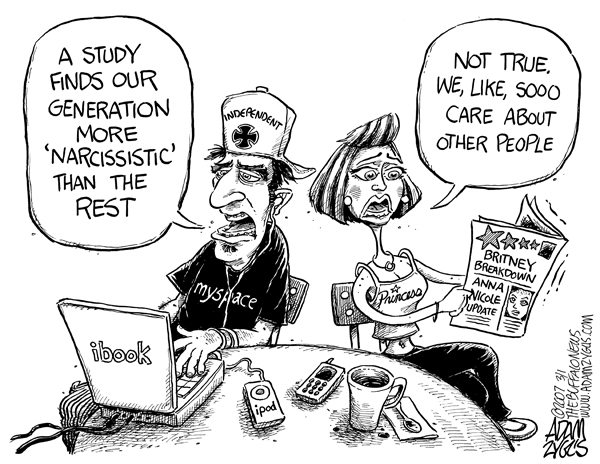
If
a single CEO could improve his income, as well as, the stock value
for a few (or maybe a few hundred) stockholders at the cost of tens
or hundreds of thousands of American jobs, there was no second
thought: they would make the move, cut jobs, and deposit the check.
This led not to outsourcing, as described above, but the transfer of
those jobs to countries with cheaper labor costs. In most cases,
these countries also have terrible human rights histories and no
environmental protection laws.
On current US economic, trade, and money policy: "If you've been in a poker game for 30 minutes and you don't know who the patsy is, you're the patsy." - Warren Buffet
What does this problem really mean for America? Every corporation is looking to cut costs. The lower costs with constant or rising prices means more profit for the corporation. More profit means higher incomes, generally for executives, and high stock prices for investors. This is not a bad result. However, it must be tempered against the impact on the rest of society.Though the leadership class (some might say caste) may benefit greatly, it leads to fewer jobs for Americans AND the divestment of capital to other countries. Sending jobs overseas means that workers in America remain unemployed, and responsively trade deficits rise as products are imported. The divestment of capital to other countries (expenditure of corporate profits on capital investment in other countries and the reduction of investment at home) means that the return of those jobs is not likely, and other positions will be created overseas, never creating a job in the US. This, obviously, further negatively impacts the economic growth of our country.

Further,
this is the cause of the global ‘race to the bottom’ where
countries seek lower wages and lower environmental and health
standards to appeal to investments of multi-national corporations.
Some argue that this is a 3rd
world
problem, but the U.S. is no exception. One must only listen to the
calls, generally from free traders and neo-conservatives, to bust the
unions, remove ourselves from environmental and human rights
treaties, and further deregulate to see this ‘race to the bottom’
in its American form.
What
impact has this had on our country? I have already discussed many of
the problems, but there are others waiting. The most pressing may be
the rising deficits and mounting debt. Every year that our trade
balance remains a deficit, our budget will never get out of deficits
either. Another, perhaps more pressing, issue is about the
outsourcing of our defense industry.
Many
Americans would be frightened to know how much of our military
technology is produced in countries that, one day, we may call an
enemy. For instance, the technology that turns explosive metal tubes
into smart bombs (the JDAM package) and cruise missiles, are produced
in China. Everything from spare tank parts, to soldiers’ uniforms,
to the flags soldiers’ carry and wear is made overseas in South,
Southeast, or East Asia- some in countries which are not so friendly
to the US. Imagine diplomacy fails and war becomes necessary with any
of these countries, or with a country they consider a close ally. In
WWII, the domestic economy geared up and started pumping out military
materials. Today, that would not be possible and our ability to
defend against an attack or to fight a foreign war may be very
limited. Some other implications, while not as important as the
previous two, certainly do have an impact.

The
use of overseas manufacturing and assembly has meant that a black
market of hundreds of millions of dollars, which means losses of the
same amount, of the intellectual property and copyrighted material,
not to mention other types of technological piracy. The question is,
relating to the above point, if these countries will allow the black
market to ‘knock off’ these
products, why wouldn’t they do the same to the military technology
they have access to.
“it’s
the economy, stupid’ – written on the Clinton ’92 ‘war room’
wall, attributed to James Carville
The
question must be asked of why we made the transition from
manufacturing to service economies. Economists and politicians said
that it was the natural progression of a capitalist economy. They
claimed that a manufacturing economy is not an advanced economy.
Thus, we needed a focus on service and technology. However, there are
examples around the world that show that an advanced modern economy
and manufacturing economy can be one and the same.

The
Japanese and German economies are based in manufacturing. They
advanced the technology of manufacturing rather than staying in the
traditional manufacturing format, which was the flaw of the American
manufacturing system. Thus, the solution is not to move away from
manufacturing, but to have manufacturing the right way, and many
studies support this conclusion. It is possible for America to return
to economic greatness, and the support of a manufacturing system will
be key to that recovery.
An
overview of the problem can be reduced to this: the shift from a
manufacturing economy to a service economy has never been done- and
it is failing. Not for everyone, the leadership class is doing
extremely well, but for the American worker, nothing could be worse.
Further,
the free trade/free market/laissez faire system has not been truly,
fully implemented. That system only truly works when the corporate
ownership/control acknowledges and embraces the concept of a modern
noblisse oblige, as the early industrialists did in their own time.
In the age of the first industrialists, they renewed the sentiment
first held by the gentry of Europe and the antebellum South that the
wealth they had was taken at the expense of the people. It was not
wrong to be wealthy, and it was not wrong that it came at a cost, but
they felt they must use some of their wealth for the public good.

From
this era come organizations like Carnegie-Mellon University (though
Carnegie and Mellon were just two of many). Further, the tycoons of
the late 19th
and
early 20th
century
did not forget about the workers on whose backs their fortunes were
built. While Standard Oil and Ford had almost complete monopolies on
their products, prices remained low. They did not feel the need to
gouge the consumer to make a dollar today, forgetting that there is
always a tomorrow.
In
a way, Bill Gates can be an expression of both of these concepts.
Microsoft held a virtual monopoly on the home PC market. Yet, Windows
remained an affordable program, and eventually became standard on any
non-Macintosh computer platform. Though he became the richest man in
the country or world, Gates has spent his way out of the top position
by giving away more money than he makes per year. His foundations and
endowments have helped people all over the world. He is a shining
example of the best
of
the laissez faire system. However, he is the exception, and not the
rule. In most cases, free trade/laissez faire economics has left us
with high underemployment, high unemployment, rising inflation,
rising divestment, soaring trade deficits and infrastructure
breakdowns. Contrary to the example set by Gates, today, the wealthy
build wealth for it’s own sake with no regard for the public who
not only buy the products and services they produce, but work for the
companies that build their wealth and pay the taxes which create the
subsidies that support their business.

Many
Board Members and businessmen around the country cry foul. How dare
we say that they must remember the consumer, the worker, and the
country in which they made their wealth! Where were these parties
when they were making the executive decisions that created the
wealth? Where were they through the trials and tribulations of
business life? What so many forget is whether you are a luxury hotel
magnate (Hilton) or a rock-bottom priced super retailer (Walton),
that wealth was not created in a vacuum.
To
all of those executives, we must ask to remember that public money
was spent to create a highway system that could speed goods and
tourists to spend their money and create your profit. When criminals
or fire threaten your business, it is public money that offers
protections. In so many ways, public funds have been expended and it
is by taking advantage of these expenditures that the opportunity for
your wealth was created. Is it unfair to return to the public
treasury a portion of that which, but for the outlaying of public
funds, would not be yours?
I
offer that it is more than fair. Any person in this country can be an
entrepreneur and strike it rich, but all must acknowledge that wealth
is not created independently and of itself.
“Accordingly,
globalization is not only something that will concern and threaten us
in the future, but something that is taking place in the present and
to which we must first open our eyes.” -Ulrich Beck
Why
did we let this happen? These corporations ARE the special interest
groups who spend money on politicians to ensure that the legislature
keeps this system operating.
So
what can we do? I’ll break down the argument into international and
national changes to try and make it a little easier to swallow.
Internationally,
we need to realize that free trade does not work. This is plain and
simple. Organizations like the WTO have been organized to maintain
order in international trade, but they are inept to handle all
situations that arise when a nation is actively trying to deceive,
rather than work within the system. (For more on this, check out my review of In
the Jaws of the Dragon about
the rising Chinese economic dominance and the Confucian truth ethic
that allows them to bypass the WTO here) Free trade has done nothing but
skyrocket our trade deficits, send millions of jobs overseas, and
made our debt reach catastrophic highs. So the first step is to
remove the US from the WTO and other international free trade
agreements, including NAFTA and CAFTA. Then, we eliminate the current
Most Favored Nation status of some of our trade partners and
reinstitute trade tariffs. Nations will be able to renew free trade
with us, after a period of reexamining the trade relationship to
ensure that free trade is actually occurring and American business
and industry is not suffering. (There will be other concerns as well,
that I will address in later posts- such as to be a free trade
partner a country will have to have higher wages, as well as, human
rights and environmental protections.)
Then,
we must set about to undo the damage at home that has been done by
this activity. First, we must pass bid-rules on government contracts
that do not allow non-US based companies to bid on those contracts.
Thus, companies that were formerly American but have been
re-incorporated in the Bahamas or Bermuda or other tax havens, will
have to return to the US and pay taxes to get the benefits of these
contracts. Further, foreign corporations will have to organize US
subsidiaries to bid on these contracts; subsidiaries that will also
pay US taxes in order to bid on those contracts. Along with the pride
of having our corporations back, a boom in corporate tax payments
will also result.
The
country will then feel no guilt in giving these industries some
subsidies that will allow them to re-tool factories and re-train a
work force to do those jobs. Pittsburgh will once again be the home
of US Steel, Detroit will once again make American automobiles, and
all over the country industries long gone or that never were will
make an appearance. Basically, this means two things: jobs for
Americans and the chance for our citizens to once again buy American.
This
cannot occur in a vacuum however, and there will have to be some
concessions. We can no longer employ 400 Americans to make a car when
other nations use 40 and robotic assembly. In order to qualify for
the subsidies, corporations will have to show that they are joining
the 21st
century
of production, not returning to the 18th.
American unions can no longer make the high demands that they once
did. Their role as protection against corporate largesse and abuse
will remain, but we need to have realistic goals for benefits and
pay. The government must stand as a bulwark between the unions and
management, as they did in the first industrial boom.
As
American industry once more becomes competitive and Americans once
more go back to work, the government will keep a keen eye on
competition and pricing and adjust tariffs to respond to these. This
is not about eliminating capitalism, it’s about ensuring that the
American worker and the American consumer are getting the best deal
for both of them. Are the tariffs protectionist? You bet. Are they
against the grain of free trade and globalism? Yes absolutely. Are
they necessary? Without a doubt. We have spent three decades breaking
down our manufacturing capacity. Had we adjusted relentlessly rather
than allowing our corporations to dismantle our hard fought gains,
this would not be necessary. However, I think most would agree, it is
necessary. Without taking this step, we may never economically
recover. Things are as bad as they possibly can be.
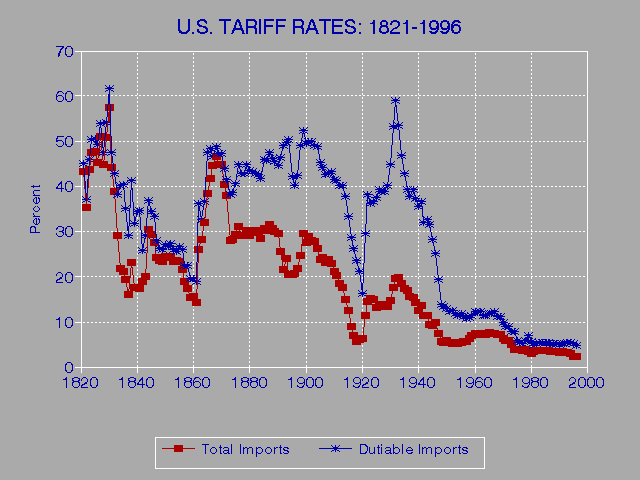
What
will result from this plan? After a period of high tariffs, economic
recovery will lead to true competition from American companies. Yes,
an American family car might still be $2,000 more than an Asian
competitor, but the American consumer has the choice based on quality
and national pride, which today is not available (All American cars
are assembled, and most parts are made, overseas/across borders.
Often an ‘American’ car is little more than a nameplate with the
parts manufactured in Mexico and shipped to Canada for assembly. The
only true American cars, with the exception of some luxury cars, are
made by foreign nameplates in American factories). That choice is at
the heart of this plan.
There
are some additional benefits as well. First, as industries come back
to America, there will be an improvement in the numbers of pollutants
put into the environment. With stricter environmental protections
already in place, these industries will have to fall in line with
Western ideas of pollution, reducing the total pollutant output in
the world. In addition, other countries will be forced to address
these issues in order to compete with US companies. This will create
a ‘race to the top’ reversing the current trends.
On
another tangent, we would return pride to Americans by putting them
back to work, putting them in control of their own destiny, and
offering consumers an American alternative. Not to mention that the
currently dwindling middle class would be revived and a return of the
true American dream could be a reality.
Naysayers
may argue many things. First, and most loudly, they will cry
isolationism. They will talk of the ruin of the world economy. They
will talk about Smoot-Hawley Act, which some economist claim turned
an American Recession into a world-wide Depression. They will talk
about the ‘need’ for American leadership in the economic world.
What they will fail to note is the detrimental effects that these
policies have ALREADY had on this nation. The question is- must we be
willing to lose ourselves, our economy, our nation to line the
pockets of a few and support those very things in another state.

Critics
will point to the post-WWII era of growth where the seeds of free
trade were planted. They fail, however, to note that America stood
alone in manufacturing at that time. There were no ‘tariffs’, to
be sure, but that is because war had dealt America the tariff of
monopoly. Second, the critics may argue that such policies would
cause prices to soar. This, in fact, is most likely true.
Prices
will rise. This is a fact that we must accept. When you institute
tariffs, the low priced items that we have been used to disappear.
These products remain of course, but the prices will rise when the
tariffs increase them. Ideally, with higher prices, comes
competition. This is because profit can be gained in a shorter term
than would be possible when a new company must compete with an older
competitor with artificially lower prices. If you’ve been following
along, creation of competition is the POINT. While the economy is
adjusting, before wages rise and jobs are created, cuts must be made.
Critics,
however, fail to take into account that with the rejuvenation of the
economy, wages will rise across the board. The first few years will
be rough and there will be difficulties. Modern America is not one to
take this type of situation well. We are used to getting more and
more for less and less money. What must be remembered is that in the
long term, this crisis will pass and on the other side, the country
will be better for our sacrifice. As I said above, it has been done
before for far less important reasons than reforming the political
and economic system of the United States for the better. In the end,
to steal a conservative idiom, a rising tide WILL lift all boats.
I
believe this is possible, and many experts agree. We must only be
willing to suffer through the opening stages, like any period of
advancement, to achieve progress and success.
©
Robert Cheek, 2011, 2013
Tuesday, April 9, 2013
Healthcare: History, Obamacare, and a Better Way
“Just
because you can make a profit on
something, doesn’t mean you should.
Some things should be sacrosanct.”
- Robert Cheek,
2011

Healthcare
has become a contentious debate in America for the past few years. With the
passing of the Patient Protections and Affordable Care Act, Congress and the
President are realigning citizens’ relationship with their healthcare insurers
and providers. There has been much political hay made about the new healthcare
law. The right has sired the law “Obamacare.” If I were the President, I would
take that name as my own (like Reaganomics), because the good that this bill
will do, will vindicate it when we look back in 5, 10, or 20 years.

As is my
policy, let’s start with a look at history and come to the present. For this
topic, I'm going to start with the more recent past, then go back to the
beginning and move forward again.
The
question I have been asked more than any other is why? Why do we need to reform
healthcare at all? For those who have insurance, they are generally happy with
their care. They can go to the doctor when they need to. They feel “taken care
of.” For those without insurance, I often hear, “well, what can you do?” They
sense that it is out of their hands. The emergency room is there for people who
get too sick to handle it on their own. This sense isn't the end of the story.
There are facts to back it up.

First,
and many people already know this, but the United States is the only
industrialized country in the world without a universal health insurance
system. Universal Healthcare can be defined many ways. Some countries offer a
single-payer health insurance through the government. That means that all
citizens are issued health insurance cards or access to care is granted with
only a social security number. This is the way Canada provides health
insurance. In other countries, the government owns and operates the hospitals,
pays the doctors, and controls every aspect of care. Healthcare is provided for
free at these facilities. This is how the United Kingdom provides healthcare.

In 2006,
the U.S. Census reported that between 45 and 46 million Americans have no
health insurance. This includes more than 9 million children, despite the
continued efforts to insure children through programs like CHIP (Children's
Health Insurance Program). Eighteen thousand people die each year because they
are uninsured, and unable to get preventative care or treatment when they get
sick. According to the UN Human Development Report, “The uninsured are less
likely to have regular outpatient care, so they are more likely to be
hospitalized for avoidable health problems. Once in hospital, they receive
fewer services and are more likely to die in the hospital than are insured
patients. They also receive less preventive care. Over 40% of the uninsured do
not have a regular place to go when they are sick and over a third of the
uninsured say that they or someone in their family went without needed care, including
recommended treatments or prescription drugs in the last year, because of
cost.”

The
impact doesn't end at health. Half of all bankruptcies are caused by medical
bills. Three-quarters of those filings are people with health insurance. U.S.
health care spending is approximately $2 trillion per year, or $6,697 per
person. This means the United States continues to spend significantly more on
health care than other countries in the world. Yet, according to the UN Human
Development Report, while the United States leads the world in spending on
health care, “countries spending substantially less than the US have healthier
populations.… The infant mortality rate for the U.S. is now higher than for
many other industrial countries.” We have lower overall quality of care and
fewer results for the money paid. A baby
born in El Salvador has a better chance of surviving than a baby in Detroit.
The infant mortality rate in Detroit is 15.5, compared to El Salvador's rate of
9.7. Cubans have a lower infant mortality rate than the United States and
according to the U.N. Human Development Report, a longer average lifespan.
Canadians live three years longer on average than we do. A study in the Journal
of the American Medical Association found that older Americans are
significantly less healthy than their British citizens. We have more diabetes,
heart attacks, strokes, lung disease and cancer. Even the poorest British citizens
can expect to live longer than the richest Americans.

While
this is the current situation, there are four times as many health care
lobbyists in Washington as there are members of Congress. Ninety percent of
Americans believe the American health care system needs fundamental changes or
needs to be completely rebuilt; and, according to a CBS poll, two-thirds of
Americans believe the federal government should guarantee universal health care
for all citizens.

The
history of health insurance is really a story of the 20th century.
Medical care before the 1900s was, for the most part, subjecting to guessing
and trial and error. In our history classes we learned about blood-letting as
treatment for illness. During the civil war, thousands were amputated rather
than having their wounds treated. Antiseptics, for all their importance today,
weren't common practice until after the turn of the century. One of the
earliest health care proposals at the federal level was the 1854 Bill for the Benefit of the Indigent Insane,
which would have established asylums for the indigent insane, as well as the
blind, deaf, and dumb, via federal land grants to the states, but was vetoed by
President Franklin Pierce. Pierce argued that the federal government
should not commit itself to social welfare,
which he believed was properly the responsibility of the states. After the
Civil War, the federal government did establish the first system of national
medical care in the South. Known as the Freedmen's Bureau, the government
constructed 40 hospitals, employed over 120 physicians, and treated well over
one million sick and dying former slaves. The hospitals were short lived,
lasting from 1865 to 1870.
By the
1920s, doctors didn't charge very much as there were few guaranteed solutions.
Doctors generally provided little more than emergency care for those who were
sick. Most people paid out of their own pockets and most patients were treated
in their homes. Only a few big employers offered health insurance, and it was
very uncommon. Early industrial sickness insurance, purchased through
employers, was one influential economic origin of the current American health
care system. These late-19th-century and early-20th-century sickness insurance
schemes were generally inexpensive for workers. Their small scale and local
administration kept overhead low, and because the people who purchased
insurance were all employees of the same company, that prevented people who
were already ill from buying in. The presence of employer-based sickness funds
may have contributed to why the idea of government-based insurance did not take
hold. Thus, at the beginning of the 20th century, Americans were used to
associating insurance with employers, which paved the way for the beginning of
third party health insurance in the 1930s.

When
doctors began learning more about diseases and effective treatments, costs went
up and expense also went up. Doctors needed to treat people in hospitals to
take advantage of new medical technology, which further added to the costs.
Just as these new developments were arising, the start of the Great Depression
made the situation was even worse.
To help
ease the healthcare problem, Baylor Hospital in Dallas created a system to help
people pay their medical bills. As science, medicine, and hospitals grew more
sophisticated and more successful, more people turned to them for care. As more
came for care, and technology developed, costs continued to rise. Insurance, through
the hospital, for doctors' services started gaining ground in the late '30s as
a way for doctors to protect their interests and their payments. This system
eventually became known as Blue Cross and Blue Shield.

The
success of the Blue Cross and Blue Shield model encouraged other insurers to
enter the healthcare market. The shortage of labor during World War II
encouraged employers to offer health insurance as an added benefit to the
employment package to entice more workers. Soon it was a commonplace for
employers to provide health insurance. As this became common practice, the
government provided tax incentives to do it. This happened at a time, during
and just after WWII, when many other countries were moving toward national
health insurance or healthcare programs. But with the US system focused on
employer provided insurance, those nationalized healthcare ideals did not take
root here.
Following
the Second World War, President Harry
Truman called for universal health care as a part of his Fair Deal in 1949 but strong opposition stopped
that part of the legislation. However, in 1946 the National Mental Health Act was passed, as was the Hospital
Survey and Construction Act, or Hill-Burton
Act. These bills would be the extent of the government foray into
healthcare for twenty years. In 1951 the IRS declared group premiums paid by
employers as a tax-deductible business expense, which solidified the
third-party insurance companies' place as primary providers of access to health
care in the United States.
In the
early days, after the success of Blue Cross and Blue Shield, private insurers
were eager to get a piece of the business. But they only wanted to insure
young, healthy people who were employed and less likely to use the coverage,
which meant more profit for the company. Private insurers didn't want older,
sicker individuals, so they began charging premiums based on different factors
like age, gender, health status, and pre-existing medical conditions. Because
of Blue Cross and Blue Shield's status as a nonprofit company, they had to
charge the sick and healthy the same premiums; private insurers did not.
Private health insurers could offer employers better insurance rates than Blue
Cross could, and the commercial health insurance business took off. With the
low-risk, and frankly more profitable, patients migrating to cheaper,
for-profit businesses, the non-profits had no choice but to follow their lead.
Each time the subject of national health insurance was mentioned, it was
quickly killed off, even though most other developing countries were heading
that way. Doctors, through the American Medical Association, and insurance
companies, threatened by having their power and profit challenged, used their
influence to kill them.

From
1940 to 1960, a completely commercial health insurance program developed.
The supply of health insurance increased as commercial insurance
companies entered the market. The use of healthcare increased as medical
technology became more sophisticated. The government encouraged employers
to offer health insurance, through private insurers, as part of employee
compensation packages. Union negotiations during the 1940's also reinforced the
employment-based health insurance system. By the 1960s, it was clear the system
of private health insurance in the United States was well established and in no
danger of being dismantled. However, there were glaring problems. The poor, day
laborers, workers for small companies that didn't provide insurance, the
self-employed, and those who had no job also had no health insurance. And once
workers retired from their jobs, usually at or near age 65, they lost their
health insurance and moved into old age without a healthcare safety net.
After
John F. Kennedy was elected president in 1960, the climate toward national
health insurance was somewhat more favorable. But the American government
realized the only way to successfully enact government-sponsored healthcare was
to start slowly. The elderly were a natural target segment.
The
elderly and the poor were among the most medically needy in society and were
the least likely to be covered by an employer's health insurance plan. To keep
doctors from opposing, as they had before, a newly proposed legislation, which
would become Medicare and Medicaid, legislators agreed that the government
would reimburse doctors at their "usual, customary, and reasonable
rate" for taking care of the elderly and the poor. This means doctors
stood to gain a great deal from Medicare, as they accessed new populations
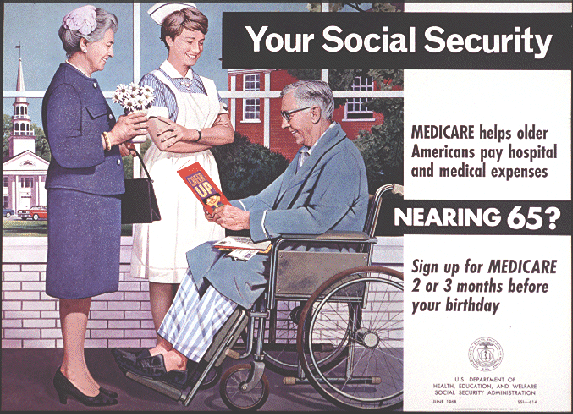
while receiving the conventional pay. The bill was passed in 1965 and consisted
of two parts: Part A covered hospital services and Part B covered doctors'
services. In addition to Medicare, Medicaid was enacted as a federal-state
program to provide medical services for the indigent. Although both programs
started small, expenditures in Medicare and Medicaid grew dramatically in the
late 1960s as the programs began to gear up. Since then, Medicare has evolved
into Original Medicare, provided by the government, and Medicare Advantage, or
Part C- an HMO style provider that has since fallen into disfavor, provided by
private insurance companies that contract with the government to provide this
insurance to seniors.
In 1993,
Healthcare Reform gained the most steam behind it since the 1960s. Running for
a Senate seat in a special election in Pennsylvania in November 1991, Harris
Wofford came from 40 points behind to win an upset victory after making universal
health coverage a central issue in his campaign. The national parties suddenly
sat up and took notice. Gearing up for
the 1992 campaign, President Bush put forward a lackluster, lukewarm healthcare
reform plan. Democratic front runner William Clinton, made hay of the plan, and
focused his talks on total reform of a broken system. However, he didn't make
reform a central aspect of his campaign, instead running on the economy. Once
elected, he formed a task force, putting first lady Hillary Rodham in charge.
After some legal and political wrangling, the task force produced a report
which would later become the basis of the bill.

The
basic idea was not complicated. Consumers, not employers, would choose health
plans. Firms would pay into a regional health insurance purchasing cooperative
(later called an "alliance"), which would offer private plans of
varying types to all residents under age 65 in an area (Medicare would remain
separate). The alliances would be required to offer traditional, fee-for-service
insurance as well as health maintenance organizations and preferred provider
plans. Benefits, co-pays, and other features would be standardized so as to
make it easier for consumers to compare prices and get the best value for
money. Health plans would have to offer coverage to everyone without exclusions
of preexisting conditions, and they would be paid according to the
characteristics of the population they enrolled. If a plan enrolled a
relatively older and sicker population, the money it received from the alliance
would be adjusted upward; if it enrolled younger and healthier members, it
would get less. Many people misinterpreted "managed competition" to
mean "competition among managed care plans." But "managed"
as a modifier of "competition" referred to a variety of measures --
open enrollment, standardized benefit packages, risk-adjusted payments to
plans, independent assessment of the quality of care -- intended to stop
insurers from trying to cherry-pick healthy subscribers and to get them to focus
instead on providing higher-quality service at lower cost.
Unfortunately,
this plan failed to get support, first among all Democrats, and then once
adopted, by Republicans. This happened despite the fact that it had zero impact
on the budget and would have required no tax dollars to be spent. It floundered
in Congress. After failing to incorporate the bill into the proposed budget,
the Majority leader declared the bill dead for that session of Congress. It
wouldn't be revisited for 17 years, until President Obama.

This
brings us to the recently passed PPACA, which I’ll refer to as Obamacare. There
have been a lot of myths tossed around about Obamacare. Let's address some of
those. First, this is a 'government takeover' of the health care system. This
talking point was and is used by Republicans repeatedly to bash Obamacare, but
it is simply not true. In fact, PolitiFact.com labeled this claim the 2010
"lie of the year," but that has not stopped lawmakers from
making this claim. In many ways, the health care law resembles the
Massachusetts reform enacted in 2006 under then Gov. Mitt Romney. It builds on
the existing private insurance system but adds requirements and incentives to
ensure that most people have some form of health insurance.

Under
the new law, there is no government alternative to the private system (this was
a potential provision that was dropped during the congressional debate) but the
number of people who qualify for the existing federal-state Medicaid program
for the poor will be expanded. States (or the federal government) will run
"exchanges,” or essentially marketplaces, in which private insurers will
sell insurance to individuals and small businesses, but this should mean more
people will get private insurance, not fewer. Tax credits will also be offered
to people who have trouble buying private insurance.
Certainly,
the law bolsters government regulation of the health care system, such as
forcing insurance companies to no longer deny coverage to people who have
existing medical conditions. People who currently do not have health insurance
will be required to buy it. But the core of the health system in the United
States will remain the existing private insurance market. So it in no way
resembles the government-run health systems used in most industrialized
countries in the world.
The
second myth is that Medicare benefits will be cut and payments will be cut to
Medicare doctors. This was another GOP attack line. The politically charged
word "cut" is a misnomer. Under the health care law, Medicare
spending will continue to increase year after year, but at a slower than
anticipated pace. Both parties, in theory, agree this would be a good thing.
The health bill will reduce projected Medicare spending by $575 billion over
ten years, primarily by reducing projected fees to hospitals and other
providers and by reducing payments to private Medicare Advantage insurance plans.
Benefits have also been added, eating into the overall projected savings, but
the impact on the Medicare Advantage plans is unclear. Richard S. Foster, the
chief actuary of the Medicare and Medicaid, has estimated that seniors may need
to pay more in out of pocket costs for such plans. He has also cast
serious doubt on whether the Medicare savings claimed in the second decade
could be achieved without significant pain for many hospitals, nursing
facilities and other providers. In fact, since 1997, Congress all but once has
waived a planned cut in Medicare payments to doctors, mostly recently in
December. So depending on the political pressure, some of these projected
"cuts" may never materialize in any case.
The third
myth is that a secretive government committee ('death panel') will be created
to make end-of-life decisions about people on Medicare. This claim, first made
by former Alaska Gov. Sarah Palin, the 2008 GOP vice presidential candidate,
has been thoroughly debunked and was labeled "lie of the year"
in 2009 by PolitiFact.com. Yet, it persists in the popular imagination.
The September Kaiser poll found that 30 percent of seniors still believed this
to be the case and 22 percent were not sure, meaning fewer than half knew the
claim was false.

The
charge partially stemmed from a proposed amendment to the bill that would have
covered the cost of end-of-the-life planning discussions. Democrats quickly
dropped the provision after the firestorm created by Palin's assertion, even
after it was proven to be factually incorrect. But the issue remains
politically sensitive. In late December, The New York Times reported that
under new Medicare regulations for annual physical examination, "the
government will pay doctors who advise patients on options for end-of-life
care, which may include advance directives to forgo aggressive life-sustaining
treatment." The White House reversed course days later, ordering
the Medicare agency to delete references to end-of-life planning in its new
regulations. Further, the myth continued with allegations from the 1993
Healthcare reformed that a government panel, in an effort to reduce costs,
would decide when a patient should get treatment and not. No part of the bill
says anything about appointing people to decide whether or not someone dies.
The decision over whether or not your claim is approved is still in the hands
of your doctors and your insurer. However, now there’s an appeals process so if
your claim gets turned down by the insurer, you can challenge it. And the
government watches that appeals process to make sure it’s not being unfair to
customers. So, if anything, the PPACA is trying to stop the
death panels. The Independent Medical Advisory
Board, formed by the PPACA, is intended to give recommendations on how to save
Medicare costs per person, deliver more efficient and effective care, improve
access to services, and eliminate waste. However, they have no real power. They
put together a recommendation to put before Congress, and Congress votes on it,
and the President has power to veto it. What’s more, they are specifically told
that their recommendation will not ration health care, raise premiums or
co-pays, restrict benefits, or restrict eligibility. In other words, they need
to find ways to save money without reducing care for
patients.
The fourth
myth is that Obamacare gives free insurance to illegal
immigrants. However, there are multiple parts of the bill that
specifically state that the recipient of tax credits and other benefits must be a legal
resident of the United States. And while the bill doesn’t specifically forbid
illegals from buying insurance or getting treated at hospitals, neither did the
laws in the US before the PPACA. So even at worst, illegals still have just as
much trouble getting medical care as they used to.
The fifth myth is that Obamacare uses taxpayer money for
abortions.
One part of the bill says, essentially, that Congress isn’t touching that
issue. It basically passes the buck on to the states, which can choose to allow
insurance plans that cover abortions, or they can choose to not allow them. Obama
may be pro-choice, but that is not reflected in the PPACA.
Finally,
there is a myth, this time from Democrats, that repealing the bill will
increase the deficit. This is technically true. It comes from a Congressional
Budget Office estimate, but there are documented problems with both this
statement and the estimate. This is a pretty shaky claim for Democrats to make,
especially since the health care law was not really intended to reduce the
deficit, but to reduce the number of uninsured Americans
So what does
Obamacare do? There are certain provisions already in effect. It allows the FDA to approve
more generic drugs (making for more competition in the market to drive down
prices). It increases the rebates on drugs people get through Medicare (so
drugs cost less). It establishes a non-profit group, that the government
doesn’t directly control, PCORI,
to study different kinds of treatments to see what works better and is the best
use of money. It makes chain restaurants display how many calories are in all
of their foods, so people can have an easier time making choices to eat
healthy. It makes a “high-risk pool” for people with pre-existing conditions; basically,
this is a way to slowly ease into getting rid of “pre-existing conditions”
altogether. For now, people who already have health issues that would be
considered “pre-existing conditions” can still get insurance, but at different
rates than people without them. Obamacare forbids insurance companies from
discriminating based on a disability, or because they were the victim of
domestic abuse in the past (yes, insurers really did deny coverage for that).
It also renews some old policies, and calls for the appointment of various
positions. It creates a new 10% tax on indoor tanning booths.
A big change is that it says that health
insurance companies can no longer tell customers that they won’t get any more
coverage because they have hit a “lifetime limit.” Basically, if someone has paid for health
insurance, the company can’t tell the person that they’ve used that insurance
too much throughout their life so the company won’t cover him anymore. They
can’t do this for lifetime spending, and they’re limited in how much they can
do this for yearly spending. A new website is made to give people insurance and
health information.
For
children and young adults, they can continue to be covered by their parents’ health
insurance until they’re 26. There are no more “pre-existing conditions” for
kids under the age of 19. Insurers have less ability to change the amount
customers have to pay for their plans.
Insurers
can’t just drop customers once they get sick. Insurers have to tell customers
what they’re spending money on (instead of just “administrative fee,” they have
to be more specific) Anti-fraud funding is increased and new ways to stop fraud
are created. A limit is placed on just
how much of a percentage of the money an insurer makes can be profit, to make
sure they’re not price-gouging customers.
People
in a “Medicare Gap” get a rebate to make up for the extra money they would
otherwise have to spend. Medicare extends to smaller hospitals. Medicare
patients with chronic illnesses must be monitored more thoroughly. It reduces
the costs for some companies that handle benefits for the elderly.
A limit
is placed on what type of insurance accounts can be used to pay for
over-the-counter drugs without a prescription. Basically, your insurer isn’t
paying for the Aspirin you bought for that hangover. Employers need to list the
benefits they provided to employees on their tax forms. Any new health plans
must provide preventive care (mammograms, colonoscopies, etc.) without
requiring any sort of co-pay or charge. As of January 1st 2013, if
you make over $200,000 a year, your taxes go up a tiny bit (0.9%).
Starting on
1/1/2014, a lot of the big changes start happening. There will be No more “pre-existing
conditions” at all. People will be charged the same regardless of their medical
history. If you can afford insurance but do not get it, you will be charged a
fee. This is the “mandate” that people are talking about. Basically, it’s a
trade-off for the “pre-existing conditions” elimination, saying that since
insurers now have to cover you regardless of
what you have, you can’t just wait to buy insurance until you get sick.
Otherwise, no one would buy insurance until they needed it. You can opt not to
get insurance, but you’ll have to pay the fee instead, unless of course you’re
not buying insurance because you just can’t afford it. (On 6/28/12, the Supreme
Court ruled that this is Constitutional, as long as it’s
considered a tax on the uninsured and not a penalty for not buying insurance.
This is nitpicking about wording, mostly, but the long and short of it is, it
looks like this is accepted by the courts); Medicaid can now be used by
everyone up to 133% of the poverty line (a lot more poor
people can get insurance); small businesses get some tax credits for two years.
(Specifically businesses with 25 or fewer employees); Businesses with over 50
employees must offer health insurance to full-time employees, or pay a penalty.
Insurers now can’t do annual spending caps. Their customers can get as much
health care in a given year as they need. Limits how high of an annual
deductible an insurer can charge customers Place a $2500 limit on tax-free
spending on FSAs (accounts for medical spending). Basically, people using these
accounts now have to pay taxes on any money over $2500 they put into them. Health
insurance exchanges will be established and rebates for the lower and
middle-class will be created, basically making it so they have an easier time
getting affordable medical coverage. Congress and Congressional staff will only
be offered the same insurance offered to people in the insurance exchanges,
rather than Federal Insurance. Basically, we won’t be footing their health care
bills any more than any other American citizen. A new tax on pharmaceutical
companies will be created. A new tax on the purchase of medical devices will be
created. A new tax on insurance companies based on their market share will be
created. Basically, the more of the market they control, the more they’ll get
taxed. Finally, the amount you can deduct from your taxes for medical expenses
increases.
Starting on
1/1/2015, there will be one big change that will help to raise quality of care
and lower costs. Doctors’
pay will be determined by the quality of their care, not how many people they
treat. By 1/1/2017, if
any state can come up with their own plan, one which gives citizens the same
level of care at the same price as the PPACA, they can ask the Secretary of
Health and Human Resources for permission to do their plan instead of the
PPACA. So if they can get the same results without, say, the mandate, they can
be allowed to do so. Vermont, for example, has expressed a desire to just go
straight to single-payer system. Later, in 2018, all health care plans must now
cover preventive care (not just the new ones), and a new tax on “Cadillac”
health care plans (more expensive plans for rich people who want fancier
coverage). Finally, in 2020, the elimination of the “Medicare gap,” or doughnut
hole, will be final.
So that
is the current state of Healthcare in the US. I have to say that Obamacare is
certainly better than nothing. However, in an effort to satisfy the AMA and
Insurance companies, Congress, like they did with Medicare, just expanded the
customer base for private insurance. As I quoted above, just because you can
make a profit on something, doesn’t mean you should.
My plan
is drastically different. I would create a nationalized insurance system,
similar to the one in Canada. Operationally speaking, this can be accomplished
by simply making Medicare apply to all citizens. Why do this? First of all, I
don’t care about insurance companies. I don’t care if they make a profit. I don’t
care if they survive at all. I think that making a profit from people’s health,
especially the way we do in America today (not focusing on preventative care,
limiting benefits for those with life threatening conditions, making people
chose between living with bankruptcy or rolling the dice with death, and
jacking up prices across the board because Americans can “afford” it) is no
different than selling guns to warlords or doing business with Nazi’s. You are
part of the problem, not part of the solution. The insurance companies won’t
all go under, of course. There will still be companies offering “Cadillac”
plans to the very wealthy; and if people would like to opt out of the
nationalized health insurance, for idealistic or whatever reason, they are
welcome to. The program would not be forced on anyone, and there would be no
mandate for insurance. However, the tax increases would apply across the board
and there would no longer be deductions for health benefits or costs.

On this issue, people are deeply divided. Those without insurance, or who cannot afford it, (which admittedly is a group of which I am a member) are generally for it. Those in opposition have offered many compelling, but in the end, not deciding arguments against. The one I hear most is “Universal health insurance does not necessarily mean universal access to health care. In practice, many countries promise universal coverage but ration care or have extremely long waiting lists for treatment. Those countries that have single-payer systems or systems heavily weighted toward government control are the most likely to face waiting lists, rationing, restrictions on the choice of physician, and other barriers to care.” As I said above, the Canadian example is often used. However, this is comparing apples and oranges. I will cover this issue more in depth in my upcoming book, but to use broad strokes. We have more doctors per capita than any other nation on the planet. People come from every different nation to go to our medical schools, because our education system is second to none. If there is any place in the world to have heart, lung, or any internal surgery done- it’s here. The same goes for most treatments of other diseases. We have more diagnostic equipment available than any country as well. The wait times for diagnosis or treatment will increase no more than under Obamacare, when the same 45 million uninsured enter the medical marketplace.
But don’t Canadians flock to America for treatment, due to their broken system? The most comprehensive study on this topic, it employed three different methodologies, all with solid rationales behind them, was published in the peer-reviewed journal Health Affairs. The authors of the study started by surveying 136 ambulatory care facilities near the U.S.-Canada border in Michigan, New York and Washington. About 80 percent of such facilities saw, on average, less than one Canadian per month; about 40 percent had seen none in the preceding year. Then, the researchers looked at how many Canadians were discharged over a five-year period from acute-care hospitals in the same three states. They found that more than 80 percent of these hospital visits were for emergency or urgent care (that is, tourists who had to go to the emergency room). Only about 20 percent of the visits were for elective procedures or care. Next, the authors of the study surveyed America’s 20 “best” hospitals, as identified by U.S. News & World Report. Only one of the 11 hospitals that responded saw more than 60 Canadians in a year. And, again, that included both emergencies and elective care. Finally, the study’s authors examined data from the 18,000 Canadians who participated in the National Population Health Survey. In the previous year, 90 of those 18,000 Canadians had received care in the United States; only 20 of them, however, reported going to the United States expressively for the purpose of obtaining care.

Another
argument I hear is that Canadian doctors are coming to the US for the
profit-based incentive. The Canadian Institute for Health Information has been
tracking doctors’ destinations since 1992. Since then, 60 percent to 70 percent
of the physicians who emigrate have headed south of the border. In the
mid-1990s, the number of Canadian doctors leaving for the United States spiked
at about 400 to 500 a year. But in recent years this number has declined. So
when emigration “spiked,” 400 to 500 doctors were leaving Canada for the United
States. There are more than 800,000 physicians in the United States right
now. In 2004, net emigration became net immigration. Let me say that again.
More doctors were moving into Canada than were moving out.

Above I
said, and they will be needed, that tax increases will come. Right now, the
average per household expenditure on healthcare is $20,000 annually. There isn’t
good data, at least that I could find, on the distribution of health costs
across the population. This is different from the distribution of health
spending, which is driven by illnesses (and is highly variable). While
certainly the wealthier pay more, and the poor pay less, this is an astonishing
figure. Taking that the average income for a household in the US is
approximately $43,000 a year, healthcare costs would attribute for just less
than half of income. Compared to this number, a tax increase of a few percent
(progressively graduated based on income) that eliminated this expenditure is a
net win for individual citizens. Also, keep in mind that around 60 million
Americans are covered by Medicaid and another 50 million by Medicare. Using
these rough numbers, and an approximate total population of 350 million, just
under a third of Americans are ALREADY covered under a government run insurance
program, with another 45 million who are uninsured or drastically underinsured.
The system just doesn’t work as it’s designed, and we need a drastic change to
both provide universal coverage, and control costs.
In summation,
the issue comes down to this: you can’t compare the US to any other country
when it comes to healthcare. You can’t use examples from nations with a few
thousand doctors for a few million citizens to extrapolate outward to a country
with 350 million citizens and almost a million doctors. More importantly, you
can’t compare a country that adopts technology with the country that creates the
technology. The US is a world leader in groundbreaking healthcare and it will
continue to be. We just need to assure that our own citizens can benefit. My
system is the best way to accomplish that. More importantly, with only one
party controlling most of the insured in the country, the ability to bargain on
reimbursement will mean that costs can be controlled much better than they are
now: another benefit of the single payer system.
I encourage
comments below; I know many people have strong opinions on the issue. Like and
share so more people will join the conversation. I haven’t addressed this
before, but I encourage debate because, call me a flip flopper if you like, but
I have been convinced to change my opinions and positions based on a argument I
feel is stronger than my own. If you think I’m wrong, tell me. I’d love to
debate it. Then, in the end, our cumulative knowledge will be stronger.
©
Robert Cheek, 2013
Subscribe to:
Posts (Atom)